Custom Software vs Off-the-Shelf Software: Which Is Right for Your Business?
A practical comparison of custom software and off-the-shelf tools, including when SaaS works well and when bespoke software becomes the better long-term choice.
Off-the-shelf software can be a strong option when requirements are simple and speed matters. But as operations become more complex, the limitations of generic tools become easier to feel. Teams start relying on workarounds, manual processes, exports, disconnected reports, and duplicated data.
That is usually the moment when the build-vs-buy question becomes more serious.
If you are evaluating whether bespoke software is the right next step, see our Custom Software Development Services.
What Is Off-the-Shelf Software?
Off-the-shelf software refers to ready-made products designed for a broad market.
Examples include:
- CRM tools
- Project management platforms
- Accounting systems
- Customer support tools
- Standard SaaS products for common functions
These tools are often attractive because they offer:
- Quick setup
- Lower upfront cost
- Familiar interfaces
- Established vendor ecosystems
For many businesses, they are the right starting point.
What Is Custom Software?
Custom software is built around a company’s specific workflows, users, systems, and operational goals.
Instead of asking the business to adapt its processes to fit a product, custom software is designed to support the way the organisation actually needs to operate.
This may include:
- Internal operational platforms
- Workflow automation tools
- Integrated business systems
- Reporting and analytics environments
- Customer or partner portals
When Off-the-Shelf Software Works Well
Off-the-shelf software is often the right choice when:
- Requirements are standard
- The process is not strategically unique
- Speed of implementation matters most
- There is no need for deeper custom workflows
- Integrations are limited or already supported well
For example, a standard accounting package or a lightweight task management tool may be perfectly adequate for many teams.
When Businesses Outgrow Off-the-Shelf Tools
Problems usually start when:
- Teams need software to support more specialised workflows
- Several systems need to work together reliably
- Manual reporting becomes a burden
- User permissions and business rules become more complex
- Data is spread across departments and platforms
- Growth creates more operational complexity than current tools can handle
At that point, software that once felt practical can become restrictive.
Common signs include:
- Too many spreadsheets around the core system
- Duplicated data entry
- Multiple workarounds for the same process
- Reporting that requires manual assembly
- Users adapting to the software rather than the software supporting them
Key Differences Between the Two
Setup
Off-the-shelf software is usually faster to start with. Custom software takes longer because it must be designed and built around your needs.
Cost
Off-the-shelf tools usually have lower upfront costs, but long-term subscription, add-ons, and inefficiencies can add up. Custom software usually requires more upfront investment but may provid
e stronger long-term value where complexity is high.
Flexibility
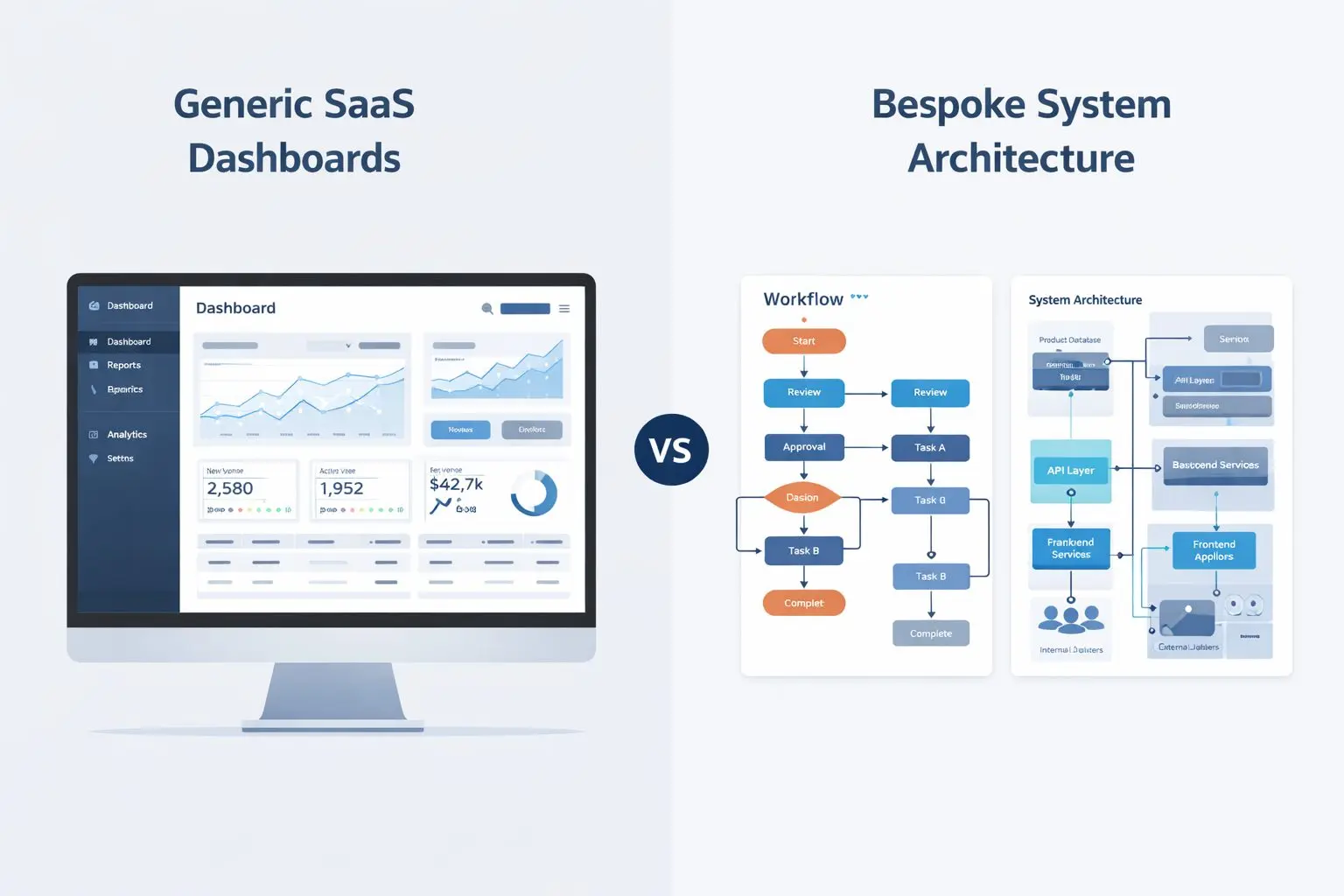
Generic tools offer predefined ways of working. Custom software offers greater flexibility because workflows, permissions, and logic can be designed around the business.
Integration
Off-the-shelf software may support common integrations, but not always the depth or structure a business needs. Custom platforms can be designed to work across the systems that matter most.
Scalability
Off-the-shelf tools can scale in some scenarios, but they may become limiting when workflows or reporting requirements become more specialised. Custom systems can be designed with future comple
xity in mind.
Control
With SaaS products, the roadmap belongs to the vendor. With bespoke software, the business has more control over what gets built and how the platform evolves.
When Should You Choose Custom Software?
Custom software is often the better option when:
- Your processes are central to how the business creates value
- You rely heavily on multiple systems working together
- Manual workarounds are becoming expensive
- Reporting and visibility are weak
- Your business has outgrown generic tools
- You need software to fit your operations, not vice versa
That does not mean every business should build. It means the more specialised and operationally critical the problem becomes, the more likely bespoke software is the right answer.
A Practical Way to Think About the Decision
The best question is usually not “which is better in general?”
The better question is: which option gives the business the best balance of speed, control, scalability, and operational fit?
For some functions, buying is right. For others, building becomes the smarter long-term decision.
In many organisations, the strongest answer is a hybrid one: keep generic software where it works well, and build custom platforms where the business needs tighter control, deeper integration,
or more specialised workflows.
Related reading:
- Top Signs Your Business Needs Custom Software
- How to Successfully Plan a Custom Software Development Project
- How Much Does Custom Software Development Cost in the UK?
Divaaco’s Perspective
At Divaaco, we usually advise businesses to treat build-versus-buy as an operational decision, not just a software decision. Off-the-shelf tools are often the right answer for standard function
s, but once software starts limiting reporting, integration, or process control, bespoke development becomes much easier to justify.
Conclusion
Off-the-shelf software and custom software both have their place. The right decision depends on how complex your operations are, how much flexibility you need, and whether your current tools ar
e still helping the business move efficiently.
If your team is relying on workarounds, manual reporting, and disconnected systems, it may be time to look beyond generic tools.
Need Help Deciding Whether to Build or Buy?
If you are deciding whether to build or buy, Divaaco can help you assess the best approach based on your workflows, systems, and long-term business goals.
Talk to our team